Always On: The Invisible Ears Inside Your Connected Home
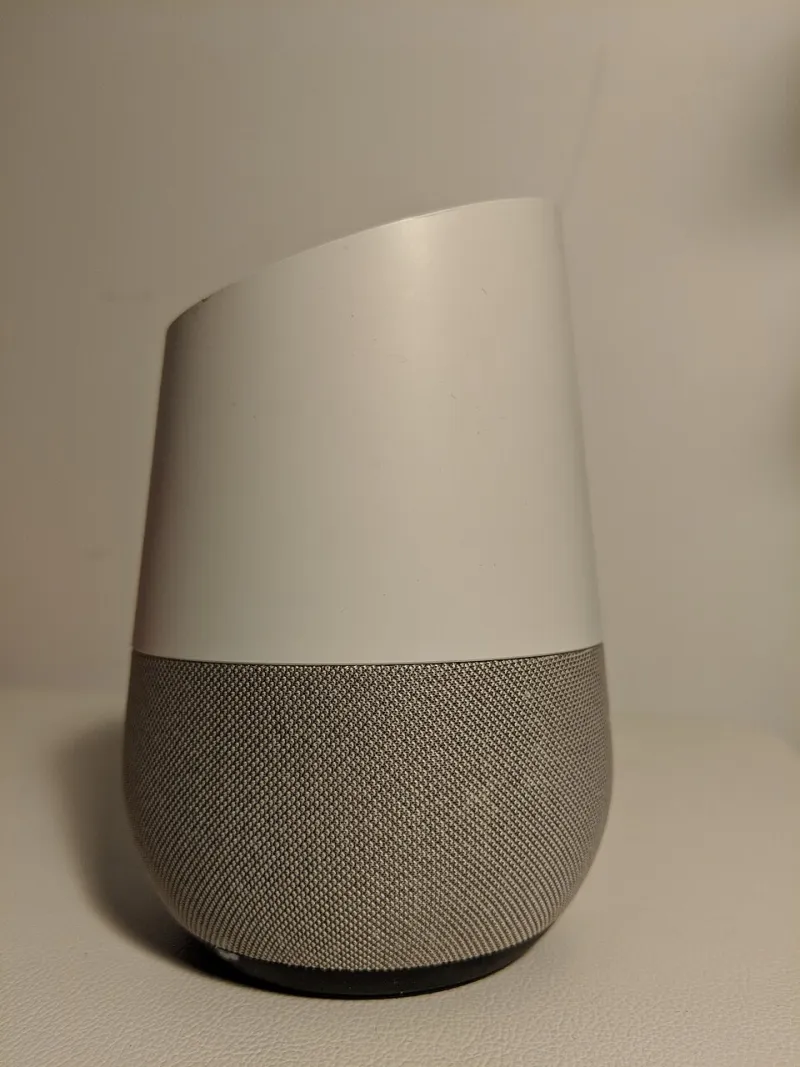
Photo: Recover-reputation-online-management, CC BY-SA 4.0, via Wikimedia Commons
Somewhere in your home right now, there is very likely a device that is listening. Not in the paranoid, tinfoil-hat sense — in the completely mundane, terms-of-service-approved, quietly-collecting-data sense. It might be your smart speaker. It might be your TV. It might be the thermostat you installed because the app seemed convenient.
These devices don't hide what they do, exactly. The information is in the privacy policies, buried in the kind of dense legal language that nobody reads. But what they're actually capable of capturing — and what happens to that audio data afterward — is a story that's a lot more complicated than the marketing copy suggests.
How "Wake Word" Detection Actually Works
Here's the part that most explainers skip over. When a smart speaker is sitting in your kitchen waiting for you to say "Hey [assistant name]," it isn't simply waiting in silence. It's continuously processing audio through a local detection model, analyzing incoming sound in short rolling windows to check for acoustic patterns that match the wake word.
This means the device is, in a technical sense, always listening. It's just that the data from those pre-wake-word windows is supposed to be discarded locally before it ever gets transmitted. The keyword is "supposed to."
Researchers at institutions including Northeastern University and Imperial College London have independently documented cases where smart speakers activated — and began transmitting audio — in response to phrases that weren't the actual wake word but were acoustically similar enough to trigger the detection model. In one widely cited study, devices were activated by television dialogue and even by segments of music. The false positive rate varied by device and manufacturer, but it wasn't zero. It was never zero.
Acoustic Fingerprinting: The Deeper Layer
Wake word detection is the obvious thing. The less obvious thing is acoustic fingerprinting — a technique that uses ambient sound patterns to extract information about an environment and the people in it.
The basic idea is that sound carries more information than just words. The acoustic signature of a room can reveal its approximate size and layout. Background noise can indicate whether a TV is on, what's being watched, and whether the household contains children. Patterns in ambient sound can be used to infer occupancy schedules — when people are home, when they're asleep, when the house is empty.
Some of this is explicitly built into smart home systems as a feature. Presence detection, routine learning, and "ambient mode" functions in various smart home ecosystems all rely on some form of environmental audio analysis. The question that doesn't get asked loudly enough is: where does that data go, how long is it retained, and who else can access it?
What the Data Actually Reveals
Conversations with privacy researchers and a handful of consumers who've gone through the process of requesting their stored audio data from major platforms paint a fairly consistent picture.
The audio clips that get retained are often longer and more frequent than users expect. Amazon has acknowledged retaining voice recordings indefinitely unless users manually delete them. Google's retention practices have shifted multiple times following regulatory pressure, but default settings have historically favored collection over deletion. Several users who requested their data found clips they had no memory of triggering — fragments of background conversation, partial sentences, ambient household noise.
Jamila Torres, a software developer in Austin who spent several months auditing her household's smart device data after a privacy scare at her workplace, described the experience as "genuinely unsettling, not because anything dramatic showed up, but because of the sheer volume of it. There were thousands of clips. Most were mundane. But collectively they were basically a timeline of my life at home."
The metadata attached to those clips — timestamps, device identifiers, location data — adds another layer. Even without the audio content itself, that metadata can be used to build a detailed behavioral profile.
The Third-Party Problem
First-party data collection — what Amazon knows, what Google knows — is the part that occasionally makes headlines. The third-party layer gets less attention and is arguably more concerning.
Smart home devices frequently operate within ecosystems that involve multiple vendors. A smart TV from one manufacturer might run a streaming app from another company, display ads served by a third, and connect to a smart home hub built by a fourth. Each of these relationships involves its own data-sharing agreements, and the privacy policy you agreed to when you set up the TV doesn't necessarily cover what happens to your data once it's been passed along the chain.
Audio ACR (Automatic Content Recognition) technology, embedded in most modern smart TVs, continuously samples audio from whatever is playing through the TV's speakers and matches it against a database to identify content. This is how the TV knows what you're watching even if you're playing something through an external device. It's also, incidentally, a continuous audio stream being processed and transmitted to a remote server. Vizio settled an FCC case related to ACR data collection in 2017. The technology is still standard.
What You Can Actually Do
The honest answer is that fully opting out while keeping your smart home functional is somewhere between difficult and impossible. These devices are designed around data collection in ways that aren't easily separated from their core functionality.
That said, there are practical steps that meaningfully reduce exposure. Physical mute buttons — the hardware kind, not software toggles — break the audio circuit rather than just suppressing it in software. Network segmentation, putting smart home devices on a separate guest network, limits what they can reach on your local network. Regularly auditing and deleting stored voice recordings through each platform's privacy settings reduces the historical record, even if it doesn't stop future collection.
For people who want to go deeper, tools like Pi-hole can block known data collection endpoints at the network level, and there's a growing community of users who document what smart home devices transmit and when.
The Signal You're Sending
Here's the thing about living with always-on devices: the data they generate isn't abstract. It's a continuous, detailed record of your habits, your schedule, your conversations, and your home environment — transmitted to servers you don't control, processed by algorithms you can't audit, and potentially shared with parties you've never heard of.
None of this requires malicious intent from the companies involved. It's just the architecture of how these products were built, optimized for convenience and data value rather than privacy. The listening was always part of the design.
The question worth sitting with is whether the convenience is worth the signal you're constantly broadcasting — and whether you've ever actually chosen to send it.