Ghost Frequencies: The Pirate Broadcasts That Built America's Underground
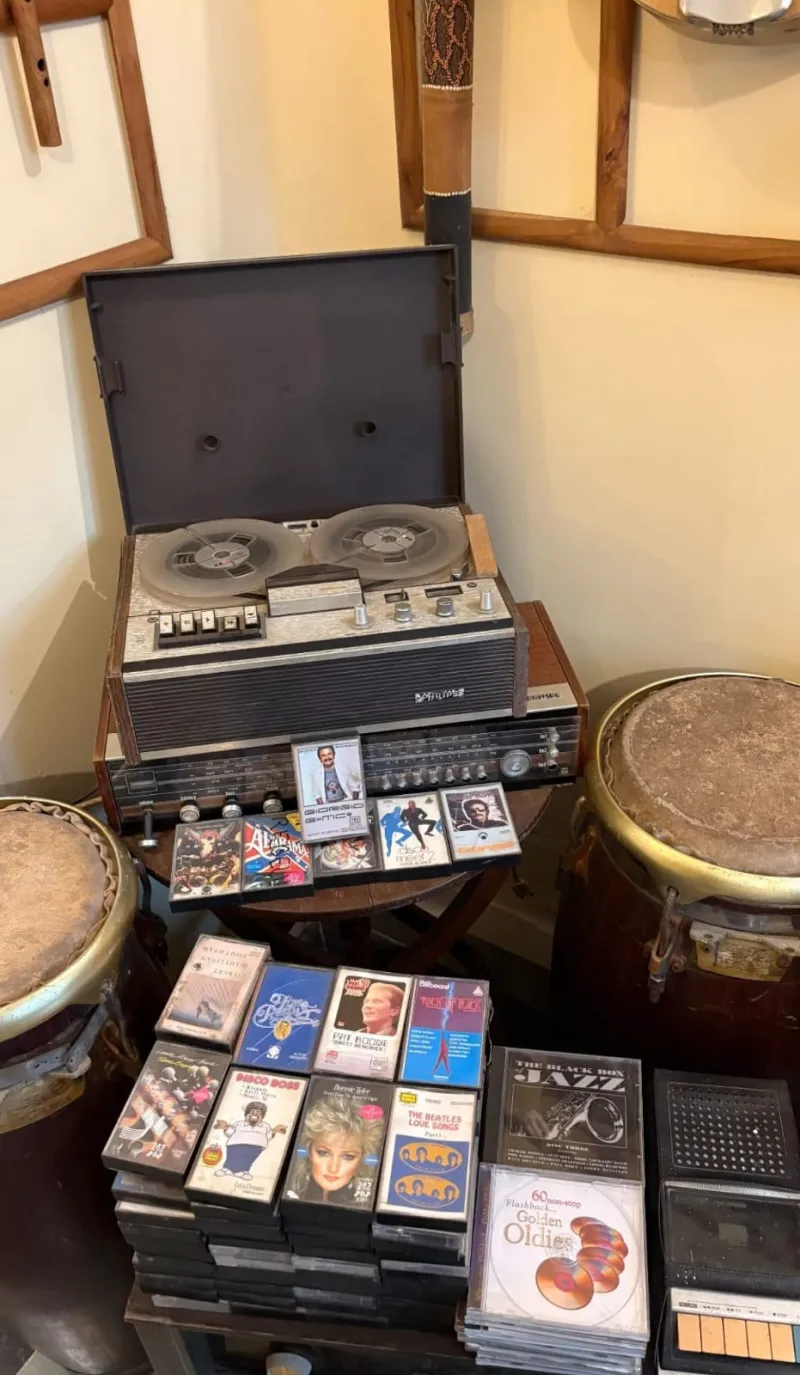
Photo: Himesh23, CC BY-SA 4.0, via Wikimedia Commons
There's a moment, if you've ever tuned an old analog radio late at night, where the signal starts to blur. Two stations bleed into each other. A voice surfaces, says something almost coherent, and then dissolves back into white noise. For most people, that's just interference. For a specific and quietly obsessive corner of American culture, it's a doorway.
We've spent a lot of time thinking about what gets preserved — the records, the zines, the canonical albums that fill "greatest of all time" lists. But some of the most formative cultural transmissions in the last century weren't preserved at all. They were broadcast once, maybe twice, received by whoever happened to be tuned in, and then they were gone. No streaming archive. No reissue. Just static.
Unlicensed and Unafraid
Pirate radio in the United States has roots that go back further than most people realize. By the 1960s and '70s, unlicensed broadcasters were operating out of apartments in New York, warehouses in Chicago, and converted vans rolling through Los Angeles. The FCC was not amused. Raids happened. Equipment got confiscated. Operators got fined.
And yet, the transmitters kept getting rebuilt.
The appeal wasn't just rebellion for its own sake — though that was definitely part of it. Commercial radio had become aggressively formatted. Program directors were running tightly controlled playlists. If your music didn't fit a specific demographic box, you weren't getting airtime. Pirate stations filled that gap with jazz experiments that major labels wouldn't touch, political commentary that mainstream broadcasters would never air, and DJs who played whatever they felt like playing at 3 a.m. because there was literally no one to stop them.
By the 1980s and into the '90s, the pirate tradition had fused with hip-hop's mixtape culture in cities like New York. Stations like WBAD and various unnamed operations broadcasting out of housing projects in the Bronx and Brooklyn weren't just playing music — they were functioning as community infrastructure. Local artists got airtime. Block parties got announced. The signal was a neighborhood.
The Aesthetics of Degradation
Here's where things get genuinely strange and genuinely interesting: the technical limitations of these broadcasts — the hiss, the dropout, the frequency bleed — didn't just become acceptable. They became desirable.
Sound artists and musicians who came of age listening to pirate radio or who discovered recordings of it later started treating signal degradation as an aesthetic language of its own. Noise music, lo-fi indie, certain strains of experimental hip-hop production — all of them carry traces of that crackling, imperfect transmission quality. It communicates something that pristine studio recording simply can't: the sense that this thing exists at the edge of what's permissible, that it almost didn't make it to you.
Archivists who spend their time hunting these recordings describe the search in almost spiritual terms. You're looking for something that was never meant to last, preserved almost by accident — a cassette tape someone left in a box, a reel-to-reel that ended up in an estate sale, a low-quality digitization uploaded to a forgotten corner of the internet in 2003 and somehow still there.
One archivist who catalogs unlicensed broadcasts from the late '80s and early '90s described finding a recording of a pirate station that had operated for only six weeks in Detroit before getting shut down. The recording quality was poor. There were long stretches of dead air. But there was also a DJ monologue in the middle — unscripted, clearly improvised — that she described as one of the most honest pieces of audio she'd ever encountered. "He was just talking to whoever was out there," she said. "He didn't know if anyone was listening. That not-knowing is in the recording. You can feel it."
The Stations That Shaped What Came After
It's impossible to trace a clean line from pirate radio to specific cultural movements, but the influence shows up everywhere once you start looking. The Chicago house scene of the mid-'80s was transmitted, in part, through unlicensed and semi-licensed broadcasts that carried Frankie Knuckles and Larry Heard to ears that would never have found them through conventional channels. Hardcore punk in the Pacific Northwest had its own network of low-watt stations and college radio shows that operated in legally ambiguous territory.
Even the aesthetic of early internet culture — the lo-fi web design, the embrace of glitch and artifact — owes something to this tradition. The people who built the early web had often grown up with pirate radio. They understood instinctively that imperfection could be a feature rather than a bug, that the roughness of a thing could be part of its authenticity.
Numbers stations — those eerie shortwave broadcasts of spoken digits, apparently used for Cold War-era espionage — occupy a particular place in this mythology. They were technically government transmissions, not pirate broadcasts, but they fed the same cultural imagination: the idea that the radio spectrum is full of hidden messages, that if you tune carefully enough, you'll catch something you weren't supposed to hear.
What Survives
The Pacifica Radio Archives in Los Angeles holds thousands of hours of recordings, including material from the margins of broadcast history. The Internet Archive has become a repository for digitized cassettes and reels that private collectors have uploaded over the years. But for every recording that makes it into an archive, there are dozens — maybe hundreds — that don't.
That loss is, paradoxically, part of the point. The ephemerality of pirate radio was inseparable from its cultural function. It existed outside official channels precisely because it couldn't exist inside them. Preserving it too completely might actually flatten what made it matter.
There's something worth sitting with in that tension. We live in an era of aggressive documentation, where the instinct is to capture everything, archive everything, make everything searchable. And yet some of the most powerful cultural transmission happens in the gaps — in the things that don't quite make it through, that arrive distorted, that require you to lean in and fill in what's missing with your own imagination.
The static isn't absence. It's signal you haven't learned to read yet.
Keep tuning.