Dead Air: The Rogue TV Stations America Was Never Supposed to See
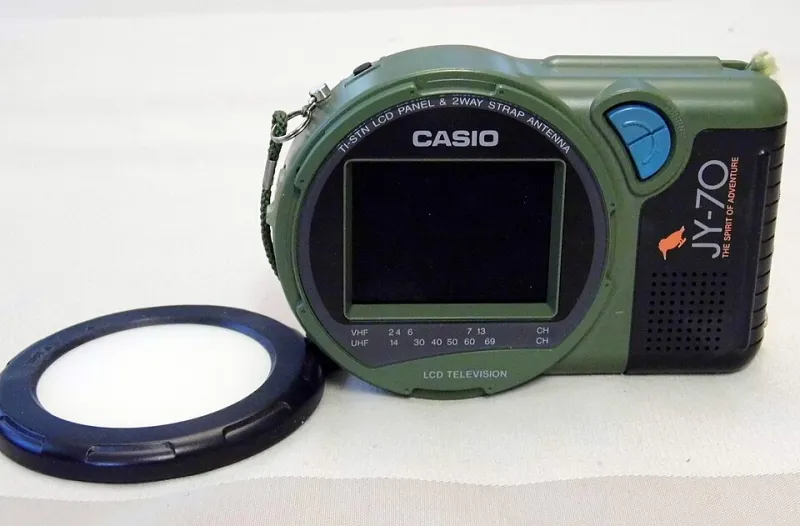
Photo: Joe Haupt, CC BY-SA 2.0, via Wikimedia Commons
There's a particular kind of static that old television sets used to make — that grainy, hissing snowstorm that filled the screen when you landed between stations. Most people just kept turning the dial. But a few people, in cities and suburbs across the country, started noticing something else buried in that noise: a signal that wasn't supposed to be there.
From roughly the early 1970s through the mid-1990s, a loose network of experimental, pirate, and outright unauthorized television stations flickered to life across the American broadcast spectrum. They were technically illegal, creatively bizarre, and surprisingly sophisticated. And almost nobody talks about them anymore.
Tuning Into the Margins
The FCC has always kept a tight grip on who gets to broadcast what and from where. Licensing a television station is an expensive, bureaucratic slog — intentionally so. The barriers exist partly for technical reasons (interference management is genuinely complicated) and partly because controlling the airwaves means controlling what people see.
But during the 1970s, consumer electronics were getting cheaper and more accessible. Surplus military transmission equipment was showing up at flea markets. And a generation raised on Vietnam War footage and Watergate had developed a fairly healthy distrust of the channels they were being handed.
The result was a scattering of rogue operations that exploited gaps in the system. Some broadcast on unused UHF frequencies — the higher-numbered channels that most people's sets could barely receive. Others set up low-power transmitters close enough to urban centers to reach a few thousand households without drawing immediate federal attention.
What They Were Actually Showing
The content ranged from earnest to genuinely surreal. In Chicago, a group connected to the early alternative arts scene ran a late-night station that aired experimental film loops, local band performances, and what former participants have described as "structured chaos" — programming that was deliberately designed to disorient. No schedules were published. You either caught it or you didn't.
In the San Francisco Bay Area, several pirate operations leaned heavily into the countercultural politics of the era. Think homemade documentaries about housing rights, footage from anti-nuclear demonstrations, and the occasional manifesto read directly to camera by someone who clearly hadn't slept in a while. Rough around the edges, but pointed.
Down in Texas, a more technically minded group spent years quietly transmitting on a frequency that partially overlapped with a commercial station's signal late at night, after the licensed station went dark. Their programming was almost entirely music — not music videos, which didn't really exist yet as a format, but live footage of local acts and long, uninterrupted concert recordings. Some of that footage has since been identified by music historians as the only existing recordings of certain regional artists.
The Cat-and-Mouse Reality
The FCC wasn't oblivious. Field agents would track interference complaints, triangulate signal origins, and show up at the source — which was often an apartment, a garage, or in one documented case, the back of a converted delivery van. Equipment got confiscated. Fines were issued. In a few cases, operators faced criminal charges.
But the enforcement was uneven. Field agents were stretched thin, the technology for rapid triangulation was less precise than it is today, and a determined operator could often dismantle a rig and relocate before anyone arrived. Some stations went dark for weeks, then reappeared on a slightly different frequency. It was a slow-motion game of hide-and-seek conducted across the electromagnetic spectrum.
Former broadcaster Ray Delacroix, who operated an unauthorized UHF station in the Detroit area for nearly four years in the early 1980s, described the dynamic in a 2019 oral history project: "They knew we were out there. We knew they knew. But they had bigger fish — the commercial guys who were cheating on their power limits, the religious broadcasters running hot. We were small enough to be annoying but not worth the full effort."
What Got Lost
The digital transition effectively ended the pirate TV era. Analog broadcasting required physical transmitters and receivers. Digital signals are harder to fake, harder to intercept, and the equipment required to generate them is significantly more expensive and harder to source quietly. The last documented analog pirate television operations in the US were detected and shut down in the early 2000s, as the FCC began its long march toward the 2009 digital cutover.
What disappeared with them was a particular flavor of unmediated communication. These weren't platforms in the modern sense — no algorithms, no engagement metrics, no advertiser guidelines. Someone had something to say, they built the equipment to say it, and they aimed it at whoever happened to be watching. The signal either reached you or it didn't.
Archive recovery efforts have had limited success. A nonprofit based in the Pacific Northwest has been working since 2015 to locate and digitize surviving footage, relying on former operators and, occasionally, viewers who recorded broadcasts on early home VCR equipment. The results are fragmentary — a few hours of footage here, a partial episode there. Most of it is gone, absorbed back into the static it came from.
The Signal Underneath
There's something almost poetic about the fact that these stations operated in the spaces the licensed broadcasters left empty. The unused frequencies, the late-night dead air, the gaps between what was officially sanctioned — that's where the interesting stuff lived.
The mainstream channels were telling you what to buy, who to vote for, and which wars were worth supporting. The pirate channels were, at their best, doing something messier and more honest: they were broadcasting the parts of American life that didn't make it past the network gatekeepers. Local grievances. Experimental art. Music that would never get a record deal. The texture of places and moments that history usually doesn't bother to preserve.
Most of it is gone now. But if you've ever pulled up an old broadcast recording on YouTube and felt that particular twinge of recognition — that sense of accidentally tuning into something real — you've gotten a faint echo of what those rogue channels were reaching for.
The static was never just noise. It was always carrying something.