Static Inheritance: What Your Smart Home Is Actually Hearing at 3 a.m.
Photo: smart speaker glowing in dark room at night electromagnetic waves, via thumbs.dreamstime.com
Somewhere in a suburb of Columbus, Ohio, a woman named Darla keeps a folder on her desktop labeled simply "the noise." Inside it are 47 audio clips, each between three seconds and two minutes long, all captured by her smart home hub between 2021 and last spring. Some are just hiss. Some carry what sounds unmistakably like a human voice — clipped, rhythmic, and just out of reach of comprehension. Her device manufacturer told her it was interference. Her neighbor, a retired electrical engineer, told her something different.
"He said it sounded like packet data riding an old AM carrier," she wrote in a post on a home automation forum. "He didn't know what to do with that either."
This isn't a ghost story. Or at least, it doesn't have to be. But it's also not nothing.
The Electromagnetic Palimpsest
Here's something worth sitting with: your house is not electromagnetically blank. It never was. Every structure in America that's been standing for more than a few decades has been bathed in radio frequency energy from broadcast towers, military installations, weather systems, and industrial equipment. That energy doesn't just pass through and disappear. It interacts. It reflects. In some cases, it gets absorbed into materials and released slowly over time — a phenomenon researchers sometimes call "electromagnetic echo," though it's not a term you'll find in any official glossary.
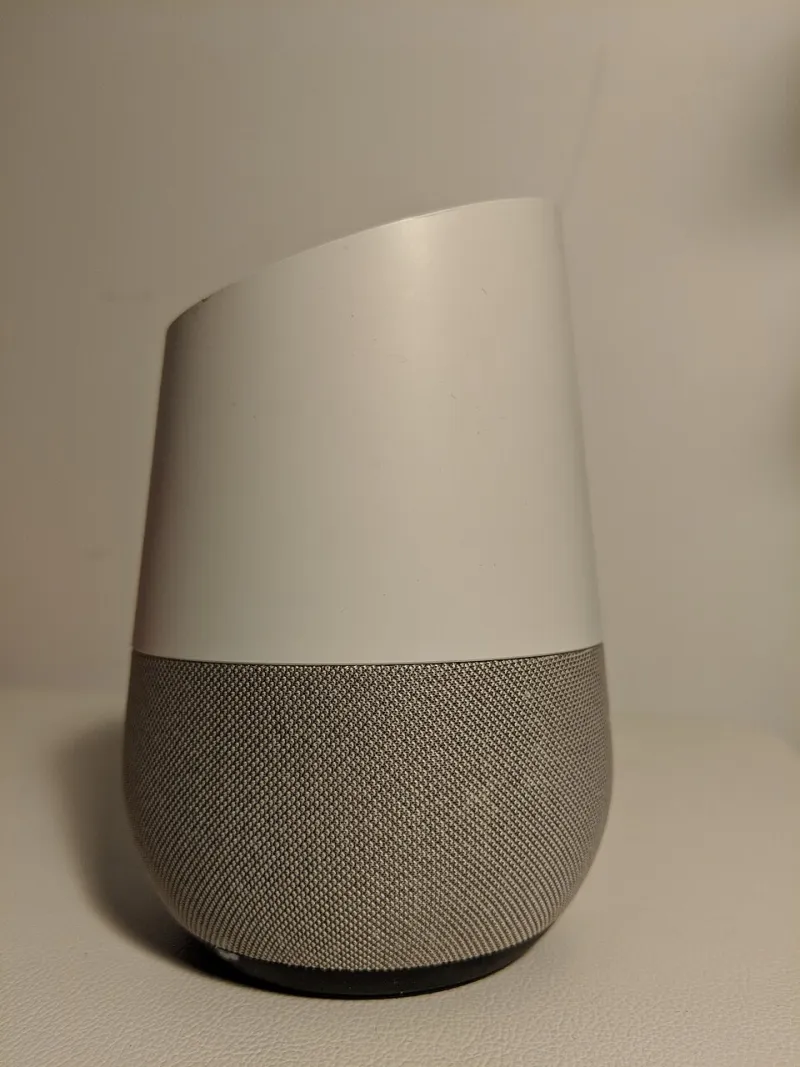
Modern smart home devices — your voice assistants, your connected thermostats, your mesh network nodes — are, at their core, extraordinarily sensitive radio receivers. They're designed to hear specific signals on specific bands, but the hardware doesn't stop receiving at the edges of those specs. It keeps listening. What it does with everything outside the intended range depends on firmware, on shielding quality, and increasingly, on whatever the manufacturer decided not to document.
Robert Fenwick, an RF engineer based in Portland who consults for consumer electronics companies, puts it plainly: "The sensitivity floor on some of these devices is genuinely impressive. You're talking about components that can resolve signals down in the noise floor that a lot of professional equipment would miss. The question is never whether they're picking something up. It's whether anyone's looking at the data."
Signals That Predate the Hardware
The stranger reports tend to cluster around specific types of locations: older homes near former industrial corridors, properties adjacent to decommissioned military land, houses built on or near the footprints of old broadcast infrastructure. This isn't universal, and it's not a hard rule, but the geographic pattern is consistent enough that a handful of amateur researchers have started mapping it.
One group, operating loosely out of a Discord server with about 800 members, has been cross-referencing user-reported anomalies against historical FCC licensing records and USGS maps of former government communication sites. Their methodology is informal and their conclusions are preliminary, but some of what they've turned up is genuinely interesting.
In a stretch of rural Virginia, several homeowners within a few miles of a Cold War-era communications relay site have independently logged what their devices flag as "unidentified audio events" — short bursts of structured sound that don't match ambient noise profiles. In a neighborhood outside Sacramento built over a former Signal Corps training facility, a cluster of smart speakers from two different manufacturers logged near-simultaneous anomalies on the same night in March 2023.
Coincidence is the most boring explanation, and it's probably the right one. But boring explanations have a way of leaving residue.
What the Manufacturers Won't Say
Ask a smart home company what their device does when it captures audio it can't classify, and you'll get a version of the same answer: it either discards the data locally or flags it for review under their privacy policy framework. What you won't get is a detailed technical breakdown of what "unidentified" means to their algorithms, or how often those flags occur across their user base.
This isn't necessarily sinister. A lot of it is just standard corporate opacity around proprietary systems. But it does mean there's a real gap between what these devices are capable of detecting and what users are told about what's being detected.
Fenwick points to the firmware update cycles as particularly opaque. "Every time there's an OTA update, the signal processing parameters can change. The sensitivity windows shift. What got flagged last month might not get flagged this month, and vice versa. There's no changelog that tells you that."
Some of the more technically inclined members of the Discord group have started running their own SDR — software-defined radio — setups in parallel with their smart home devices, trying to catch the same signals independently. A few have succeeded. What they've found, in several cases, are narrowband transmissions on frequencies associated with legacy paging systems and early digital dispatch networks — infrastructure that was officially decommissioned years ago but may still be generating residual emissions from aging, unpowered hardware.
The Other Possibility
There's a category of explanation that nobody in an official capacity will touch directly, but that comes up consistently in conversations with people who've spent time around government communication systems: active interference from classified or semi-classified operations that use frequency ranges adjacent to consumer device bands.
This isn't fringe speculation. The federal government operates an enormous amount of communication infrastructure that isn't publicly documented, and some of it operates in or near spectrum that consumer devices also use. The FCC's own interference complaint database includes thousands of cases annually where the source of interference is listed as "federal operation" with no further detail.
Whether any of that explains what Darla in Columbus has in her folder, or what the Sacramento cluster logged in March, is genuinely unknowable from the outside. The signal is there. The source is somewhere in the static.
Living With the Noise
Most of the people who've documented these anomalies aren't alarmed by them, exactly. They're curious. There's a particular kind of person who finds it interesting rather than unsettling to discover that their home is sitting inside a layered history of electromagnetic activity they can't fully read.
Darla has stopped trying to get her manufacturer to explain the folder. She's started working with a local radio club to build a more systematic logging setup — something that can capture frequency metadata alongside the audio. "I don't think it's anything scary," she said. "I just think it's something. And I'd rather know what it is than pretend it isn't there."
That feels about right. Your smart home is not just a network of convenient appliances. It's a receiver sitting inside a signal environment that has decades of history baked into it. What it hears when you're not asking it anything — that's a question worth taking seriously, even if the answer turns out to be mundane.
Even mundane signals carry information. You just have to know how to read them.