The Frequency Archive: Field Recorders Chasing America's Dying Industrial Sound
Photo: Argenteria1995, CC BY-SA 4.0, via Wikimedia Commons
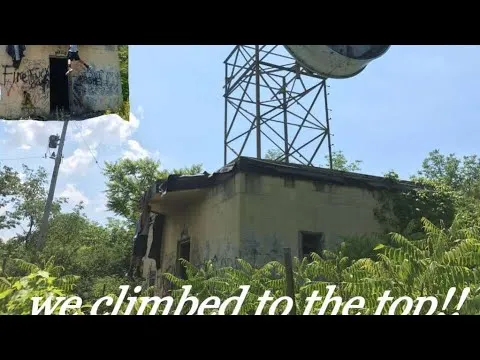
The last time Marcus drove out to the old relay station in the Nevada high desert, he brought four microphones, a contact transducer, a reel of cable, and a thermos of coffee that went cold before he'd finished setting up. He spent eleven hours there. He recorded the wind moving through the guy-wire anchors of a tower that hadn't transmitted anything in thirty years. He recorded the groan of a corrugated metal building settling in the afternoon heat. And somewhere around dusk, he recorded something that he still can't fully account for — a low, cycling hum emanating from a concrete equipment vault that had been sealed, according to county records, since 1987.
"It wasn't the building," he says. "Buildings don't do that. It had a period to it. A rhythm."
He's released the recording as part of a limited run cassette. He's also submitted a copy to an archive project that collects exactly this kind of thing — sounds from places that are disappearing, sounds that carry histories their locations no longer advertise.
What Acoustic Archaeology Actually Means
The term gets used loosely, but at its most rigorous, acoustic archaeology is the study of how sound interacts with physical space over time — how a room's geometry, materials, and history shape what you hear inside it, and what that tells you about how it was used. Applied to industrial and military sites, it becomes something stranger and more interesting: an attempt to read the residue of technological activity through what those spaces still emit, reflect, or absorb.
Americans built a staggering amount of infrastructure during the twentieth century, and a significant portion of it is now in various states of abandonment. Steel mills. Radar installations. Telephone switching centers. Munitions depots. Naval communication arrays. Each of these sites has an acoustic signature shaped by its original function — the specific resonances of its architecture, the interference patterns of its equipment, the ambient electromagnetic environment it created and that partially persists.
When a site goes dark, that signature doesn't immediately vanish. It degrades. It shifts. It gets overlaid by new sounds — wind, wildlife, structural decay — but traces of the original persist longer than most people expect. Field recorders working in this space are, in a real sense, working against a clock.
The People Doing This Work
They don't have a single name for what they do, which is part of why it's easy to miss. You'll find them under "phonography," "sound art," "acoustic ecology," or just "field recording." Some have institutional affiliations — university sound studies programs, documentary archives, environmental research organizations. Most don't. Most are operating on personal obsession and whatever gear they can afford.
Leah, based in Pittsburgh, has spent the better part of a decade documenting the acoustic remnants of the Mon Valley steel industry. She's not just recording the mills that are still standing — she's recording the riverbanks, the neighborhoods, the infrastructure that supported the industry and now exists in a kind of purposeless suspension. "The mills had a sound that traveled," she says. "It shaped what everything around them sounded like. And that shaping is still there, in the way sound moves through those neighborhoods. In the reflections. In the absence."
Her archive now runs to several hundred hours of material, organized by site, date, and what she calls "interference type" — a classification system she developed herself that distinguishes between structural acoustics, environmental noise, and what she terms "legacy emissions," which is her phrase for electromagnetic activity that seems inconsistent with a site's current state.
Out on the East Coast, a collective called Groundwave has been systematically working through the former LORAN navigation network — the chain of coastal transmission stations that guided ships and aircraft before GPS made them redundant. Most LORAN sites were decommissioned between 2010 and 2015. The towers are largely gone. But the physical plant — the transmitter buildings, the antenna fields, the ground radial systems — remains at many locations, and Groundwave has been documenting the acoustic environment of each one, including the residual electromagnetic signatures that their equipment still picks up at some sites.
"There are ground radials at some of these stations that are still in the earth," says one Groundwave member who asked not to be named. "Copper wire, buried in a star pattern around where the antenna was. They're not connected to anything anymore. But they're still there, and they still interact with the ambient RF environment. You can hear it if you know what to listen for."
Why It Matters, and Why the Clock Is Running
The preservation argument for this kind of work runs in a few directions simultaneously.
There's the historical record argument: these sound documents capture something that written records and photographs can't — the experiential texture of industrial and technological environments that shaped American life for generations and are now gone or going. A photograph of a radar installation tells you what it looked like. A recording made inside its operations building in 1998, a year before decommissioning, tells you what it felt like to exist in that space — the hum of the equipment, the resonance of the concrete, the specific acoustic fingerprint of that technology.
There's the scientific argument: some of what field recorders are capturing at these sites has genuine research value. Electromagnetic emission patterns from aging infrastructure can inform understanding of long-term RF exposure environments. Acoustic signatures of specific industrial processes are increasingly difficult to document as the processes themselves disappear. Several university programs have begun formally partnering with independent field recorders to incorporate their material into research archives.
And then there's the argument that's harder to articulate but that most of the people doing this work feel most keenly: these sounds are a form of cultural memory that nobody officially decided to preserve, which means they're at serious risk of simply ceasing to exist. Physical decay, site remediation, development — all of it erases the acoustic record along with everything else.
"In twenty years, you won't be able to stand in a former LORAN field and hear what I heard there last fall," the Groundwave member says. "The ground radials will have corroded. The buildings will be gone. Whatever's still interacting with the RF environment will have stopped. That's a document that will no longer exist anywhere except in the recordings."
Signal Preservation as Cultural Act
There's something that feels distinctly American about this particular form of archival anxiety — the impulse to document the residue of industrial ambition at the exact moment it's becoming unreadable. We built enormously, and we moved on quickly, and now a scattered group of people with microphones and contact transducers are trying to catch what's left before it fully goes quiet.
Marcus is already planning his next trip to the Nevada relay station. He wants to go back in winter, when the thermal behavior of the site changes and the vault, he suspects, might sound different. He's not sure what he'll find. He's not sure what the hum was.
But he knows it was there. And he knows that someday it won't be.
That's enough reason to record it.