Ears in the Landscape: The Cold War Listening Infrastructure America Left Behind
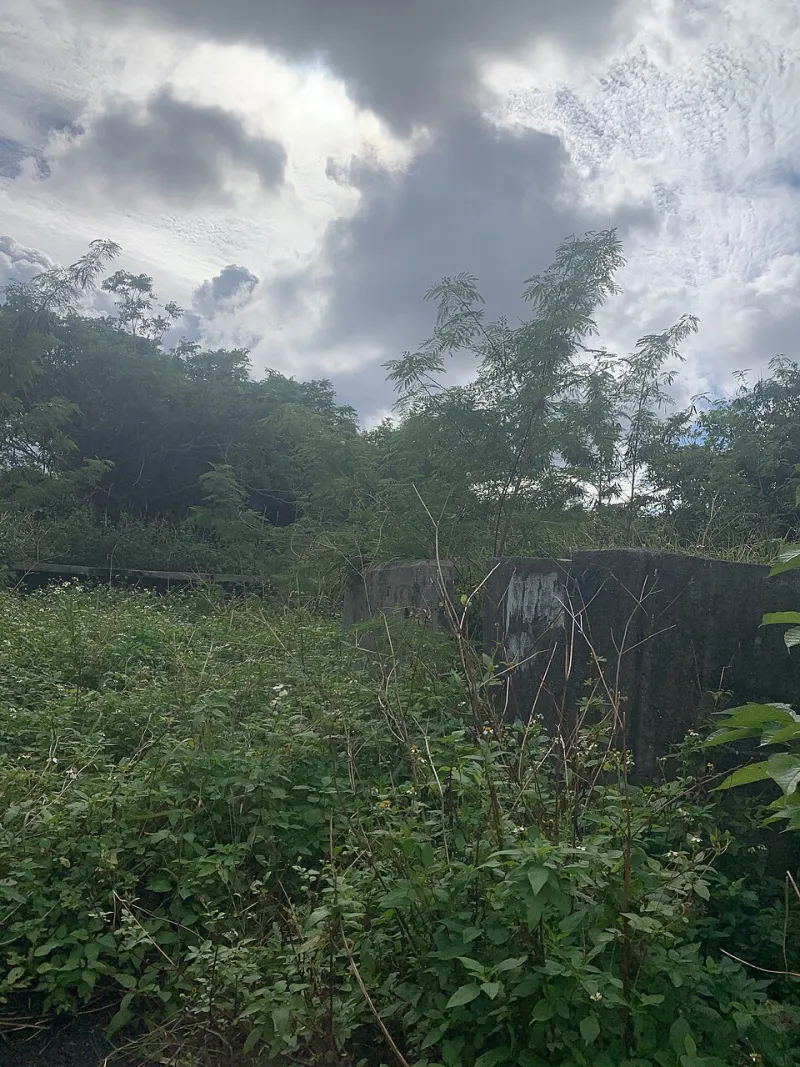
Photo: Yes Yes NoNoNo, CC BY-SA 4.0, via Wikimedia Commons
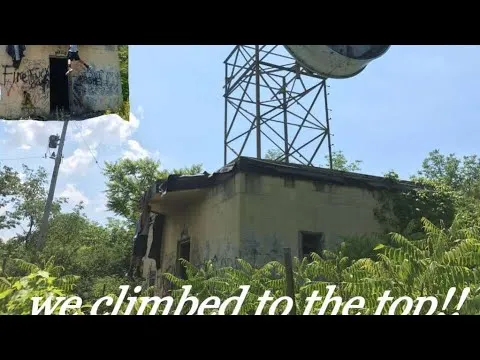
There's a field in rural West Virginia where the trees grow in a perfect circle around a clearing that shouldn't exist. No farmhouse. No access road worth mentioning. Just a concrete pad, some corroded conduit sticking out of the earth, and a chain-link fence that's been there longer than most of the people who live nearby can remember. Ask around and the answers get vague fast. Government thing, someone will say. Always been there.
That's kind of the point.
The United States spent the better part of five decades building one of the most extensive signals intelligence networks in human history — and a lot of it was designed to look like nothing at all. Relay antennas disguised as agricultural equipment. Listening posts filed under innocuous federal land designations. Facilities that appeared on no map you could buy at a gas station. The Cold War wasn't just fought in boardrooms and missile silos. It was fought in the electromagnetic spectrum, and the hardware required to wage that war is still sitting in the American landscape, rusting and forgotten and occasionally very much not.
ECHELON and the Architecture of Silence
Most people who've heard the name ECHELON encountered it in the context of conspiracy forums or early-2000s tech journalism. The reality, as confirmed through years of declassified documents and investigative reporting, is both more mundane and more unsettling than the mythology. ECHELON was a signals intelligence-sharing arrangement between the US, UK, Canada, Australia, and New Zealand — the so-called Five Eyes — that used a global network of ground stations to intercept satellite communications, microwave transmissions, and radio traffic on a genuinely massive scale.
The American nodes of that network weren't all tucked away in classified facilities. Some operated openly as military communications installations. Others were embedded within existing infrastructure — satellite uplink stations, remote federal properties, facilities operated by contractors whose names meant nothing to anyone outside the intelligence community. Sugar Grove, West Virginia — a Navy installation that operated for decades before partial declassification — is one of the more documented examples. Its massive dish antennas, visible from surrounding roads, were pointed at commercial communications satellites. The intercept capability was the whole point.
Radio historian and independent researcher David Kahn — no relation to the cryptography author — has spent years cross-referencing declassified NSA documents with topographic surveys and satellite imagery. "The thing people don't understand," he told us, "is that these facilities weren't hidden because they were invisible. They were hidden because no one was looking. The infrastructure was right there. It just didn't look like what people imagined surveillance looked like."
The Declassified Remainder
Since the 1990s, a slow trickle of government disclosures has given researchers and enthusiasts a clearer picture of what was built, where, and — sometimes — why it was abandoned. The end of the Cold War didn't mean the end of signals intelligence, but it did mean a significant restructuring of priorities. Facilities optimized for intercepting Soviet military communications became less useful. Satellite-based collection replaced a lot of what ground stations had been doing. And the physical infrastructure, often on federally owned land, got quietly decommissioned.
"Decommissioned" covers a lot of ground. Some sites were stripped and demolished. Some were transferred to other federal agencies and repurposed for legitimate civilian uses — weather monitoring, scientific research, communications relay. Some were simply... left. The equipment removed, the buildings locked, the land fenced off under a designation that technically belongs to one agency or another but practically belongs to no one.
Amateur radio operators and shortwave enthusiasts have been cataloging these sites for years, cross-referencing property records, FOIA requests, and the collective memory of communities that grew up around them. Online forums dedicated to radio history are filled with threads that read like detective work — grainy satellite images, hand-drawn maps, firsthand accounts from former federal employees who remember driving past a particular installation every day without ever knowing what it actually did.
Signal Archaeology
What makes this more than just infrastructure tourism is what these sites reveal about the evolution of surveillance as a concept. The Cold War listening apparatus was physical. It required land, buildings, antennas, people. It left marks on the landscape. You could, in theory, find it — which is partly why so much effort went into making it look like something else.
The transition to digital surveillance removed most of those physical constraints. The NSA's data collection programs revealed by Edward Snowden in 2013 operated largely through legal agreements with telecommunications companies and software-level access to data streams. The "facility" became a server room. The antenna became a fiber tap. The landscape stopped holding the secret.
Understanding the physical infrastructure of the earlier era helps clarify what changed — and what didn't. The logic of interception, the institutional appetite for comprehensive signals collection, the tendency to treat the electromagnetic spectrum as a territory to be occupied: none of that went away. It just got smaller and harder to see.
"The old sites are like fossils," says one radio historian who asked not to be named due to ongoing research sensitivities. "They tell you what the organism looked like before it evolved. The surveillance state didn't disappear when the dishes came down. It just stopped needing dishes."
What the Landscape Remembers
Back in West Virginia, the concrete pad in the circular clearing is one of dozens of similar anomalies documented by local researchers over the past two decades. Some have been positively identified through declassified records. Others remain ambiguous — possibly intelligence infrastructure, possibly something entirely mundane that got caught up in the mythology of the region.
That ambiguity is itself worth sitting with. The Cold War surveillance network was built to be ambiguous. It succeeded. And now, decades later, the ambiguity is all that's left — encoded in the landscape, in the property records, in the memories of people who drove past the fence every day and never asked what was behind it.
The signals may have stopped. The infrastructure is still broadcasting, in its way. You just have to know how to read it.