Dead Channels: The Creatives Who Moved Into America's Abandoned Broadcast Bunkers
Photo: Solomon203, CC BY-SA 4.0, via Wikimedia Commons
The control room still has its original equipment. Patch bays line one wall, a forest of quarter-inch jacks and coiled cables that haven't carried a signal in over a decade. The monitor bank — twelve screens arranged in a grid, the kind of setup that once let a director cut between live feeds — now displays a rotating loop of generative video art that a 24-year-old coded in a converted edit bay down the hall. The building used to be a UHF station. Now it's something harder to name.
"We didn't really plan it," says one of the collective's founding members, who goes by Sable and has been working out of the space for three years. "Someone knew someone who knew the building was sitting empty. We came to look at it and just — didn't leave."
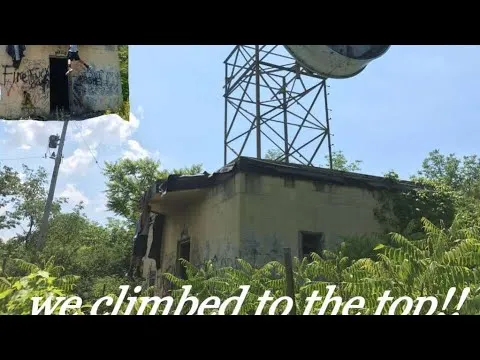
This is happening in more places than you might expect. As the broadcast industry consolidated over the past two decades — mergers, digital transitions, the quiet collapse of local television economics — it left behind a scattered infrastructure of facilities that nobody knew quite what to do with. Transmitter buildings. Studio complexes. Satellite uplink stations. Some were demolished. Some were sold to developers. And some fell into a kind of administrative limbo, sitting empty while ownership questions resolved themselves across years of estate disputes and corporate restructuring.
Into that limbo, artists moved.
The Infrastructure of Obsolescence
What makes broadcast facilities different from other abandoned industrial spaces is specificity. A former factory is a big empty box. A former television studio is a former television studio — purpose-built, acoustically treated, wired for power loads that most residential and commercial buildings never need to support. The infrastructure that made these spaces useful for broadcasting turns out to make them useful for other things.
Heavy electrical service supports fabrication equipment, high-wattage lighting rigs, and the kind of server infrastructure that experimental media artists increasingly require. Acoustic isolation — built to keep street noise out of live audio recordings — works just as well for loud bands and experimental sound installations. Loading docks designed for equipment delivery are ideal for bringing in large-scale art installations. And the sheer square footage of facilities built to house multiple production stages simultaneously gives collectives room to do things that galleries, clubs, and conventional studio spaces simply can't accommodate.
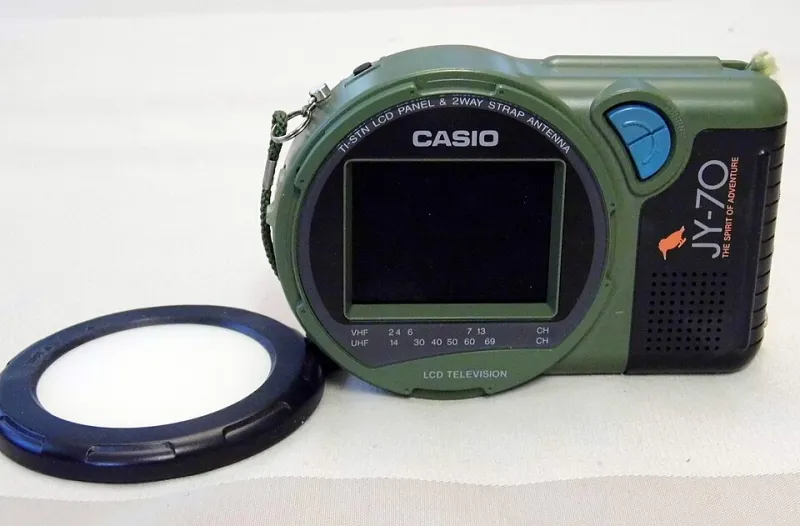
The equipment left behind is its own draw. Analog broadcast technology has developed a devoted following among artists and musicians interested in its particular aesthetic qualities — the warmth of magnetic tape, the specific color rendering of tube-based cameras, the visual artifacts produced by overdriven video signals. Finding a working facility full of this equipment, even if much of it requires restoration, is the kind of discovery that spreads through certain networks fast.
Legal Gray, Creative Latitude
The legal situation for most of these occupations is genuinely complicated, and the people involved tend to be thoughtful about discussing it. Some spaces operate under informal agreements with owners who prefer the building occupied and maintained over leaving it vacant and vulnerable to deterioration. Others exist in more precarious arrangements — month-to-month understandings, handshake deals, or outright squatting that everyone involved declines to label precisely.
Zoning is often an obstacle even when ownership isn't. Buildings permitted for broadcast use don't automatically qualify for live performance, food service, or public assembly — all things that collectives frequently end up doing. Fire codes, occupancy limits, and ADA requirements create compliance burdens that organizations operating without formal revenue streams can't easily meet.
The result is a culture of strategic ambiguity. Events are framed as private gatherings rather than public performances. Collectives describe themselves as artist residencies rather than venues. Admission is sometimes structured as donation, sometimes as membership, sometimes as nothing at all, supported by the occasional grant or the generosity of members with day jobs.
"We're not trying to run a business," explains a sound artist who works out of a former cable access facility in the mid-Atlantic region and asked not to be identified by name or location. "We're trying to make work. The space makes certain kinds of work possible that wouldn't be possible otherwise. So we protect the space."
What Gets Made There
The output of these spaces is as varied as the people in them, but certain patterns emerge. The combination of broadcast infrastructure and creative freedom tends to produce work that engages directly with media history — art that thinks about transmission, signal, reception, and the cultural weight of the screen.
Live performance work that incorporates real-time video mixing, using actual broadcast switchers rather than software simulations, has become a recurring form. Some collectives have revived the aesthetic vocabulary of public access television — low-resolution, direct, deliberately non-commercial — as a kind of intentional counter-programming to the high-production-value content that dominates contemporary screens. Others use the spaces for recording music that benefits from the acoustic properties and equipment that broadcast facilities uniquely offer.
A few have gone further, actually putting signals back on the air — internet streams and low-power FM broadcasts that consciously echo the community broadcasting traditions that commercial consolidation largely extinguished. These operations exist in their own legal gray areas, but they've built real audiences in their respective cities.
Preservation vs. Reclamation
Not everyone is enthusiastic. Broadcast historians and preservationists sometimes find themselves in tension with the creative reclamation crowd — not because they object to the art, but because active use of equipment can accelerate its deterioration. Vintage broadcast gear is increasingly irreplaceable. A camera that gets incorporated into an installation and run continuously for months is a camera that may not survive to be properly archived.
The collectives tend to be more conscious of this tension than critics give them credit for. Many have developed informal relationships with restoration specialists, and some have made equipment preservation part of their explicit mission — maintaining gear in working condition precisely because they want to use it, not despite that fact.
"We're not a museum," says Sable. "But we're not indifferent to what this stuff is either. Part of what we're doing is keeping it alive. A camera sitting in a warehouse for twenty years doesn't survive that either."
The Signal Continues
There's something fitting about broadcast infrastructure being repurposed this way. These buildings were always about transmission — about taking something made in one place and sending it somewhere else, reaching people who didn't know to expect it. The collectives operating in them are doing something similar, just with smaller audiences and stranger content and a much more ambiguous relationship with the idea of permission.
The golden age of American local television is not coming back. The economics that supported hundreds of independent stations producing original content for specific communities don't exist anymore, and nobody seriously expects them to return. But the physical legacy of that era — the studios and transmitter sites and edit bays — is still out there, in various states of decay and rediscovery.
Some of it will be torn down. Some of it will be converted to condos. And some of it, in cities and small towns across the country, will quietly become something new — not a broadcast facility exactly, but not not one either. A place where signals still get made, just for different reasons, by different people, on different terms.
The channel isn't dead. It just changed hands.